
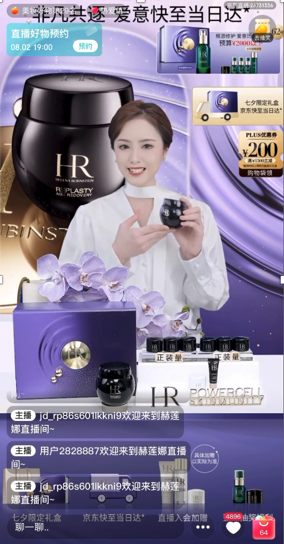
Just after midnight in a Hangzhou, China livestreaming studio, a woman sells skincare to an audience of strangers. Her name is Amber-1. She blinks, tilts her head, and holds eye contact a beat too long as she works through her pitch in polished, tireless Mandarin: “This cream is what every girl dreams of. This is our star product. Its ingredients are…” She will keep going until sunrise, because Amber-1 is an AI avatar, and she never needs to sleep.
Viewers notice. “Robotic,” one writes. “Fake,” “AI,” others chime in. They are right, and in this studio it does not matter. By morning, Amber-1 will have sold roughly 60 percent of what her human predecessor sold in the same overnight slot, at a fraction of the cost. Within months, the agency that runs this channel will cut its roster of human streamers from six to two.
Continue Reading…