Author Archives

Laura Lam

Research Findings

The Platform Paradox: How Platform Workers Experience Freedom and Control at the Same Time

, and
June 21, 2026
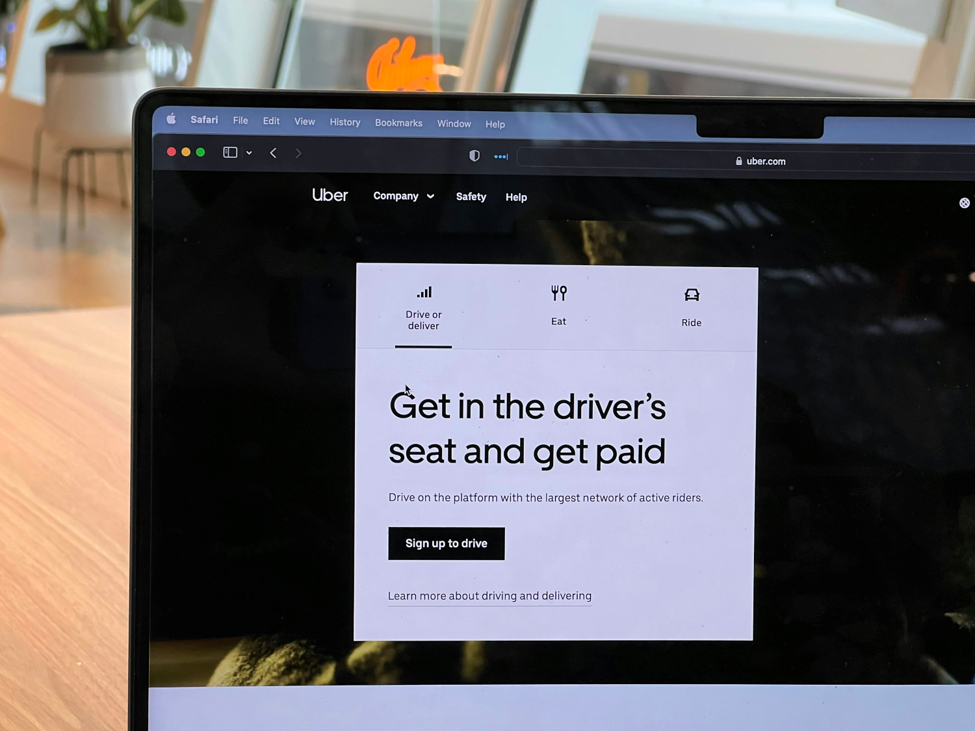
Image: Photo by Oberon Copeland on Unsplash.

In 2020, more than two million platform jobs were added to the U.S. economy. Workers are drawn by the prospect of flexibility in a job without fixed schedule and the potential to earn money on-demand.  Yet the same apps that promise independence often leave workers dealing with low pay, uncertainty, and long hours.

In a recent article, we argue that this tension, between rhetoric and reality, it is central to how platform work operates.

We call this tension the platform paradox: platforms invite workers to see themselves as independent entrepreneurs while quietly tightening control over how they work, present themselves, and spend their time.

The appeal is cultural as much as economic. Platform companies tap into a familiar American narrative: that with hard work, hustle, and self-belief anyone can succeed. And the dream of entrepreneurship resonates in a culture that values self-reliance and self-made success. The entrepreneurial  story is powerful because platforms present themselves as open to people with barriers to entering standard employment. The mother who can only work limited hours, the newly arrived immigrated with limited English language skills, and the returning citizen who faces labor market discrimination can all find work. The pitch is simple: if you have a car, a bike, a phone, or a skill, you can start earning right away.

The entrepreneurial promise

That promise is not pure fiction. In practice, users can typically log on and begin earning immediately. Many workers highly value instant payouts, alongside the flexibility to manage family demands and a sense of dignity they might not find elsewhere.

But the lived reality is often harsher than the high expectations cultivated by marketing. Workers describe unstable earnings, the stress of managing constant customer ratings, invasive monitoring, customer abuse, and pressure to be available whenever the app needs them.

In our paper, we show that this contradiction helps explain why platform work can feel both empowering and exploitative at once. The same features that make the work attractive also become tools of oppression that can harm workers’ wellbeing.

How platforms turn the self into a management tool

To explain this apparent contradiction, we draw on the idea of neo-normative control. Unlike traditional forms of normative workplace control, where companies try to shape employees into a common culture, neo-normative control encourages workers to be themselves—as long as their individuality helps advance the company’s goals. Put simply, this is a form of management that shapes how people understand themselves. Instead of an employer telling workers what to do, workers start to tell themselves what to do in a way that lines up with what the organization wants. We identify three ways that neo-normative control shapes platform workers’ experiences

First, workers become the product. On platforms like Uber, Upwork, Instagram, or TaskRabbit, customers are not only buying a ride, a task, or a piece of content; they are also buying a curated version of the worker. Profiles, ratings, responsiveness, friendliness, style, and authenticity all become part of what is being sold.

This can feel empowering, as workers learn how to polish their profiles, answer customers quickly, and make themselves attractive to the algorithm. A profile creator learns how much personal life to reveal, while a driver learns where to wait and how to manage tips and customer moods. However, these skills are narrow. It is unclear how a platform worker can transfer these skills into the possibility of making more money.

Second, platforms blur the line between work and the rest of life. They encourage workers to bring their whole selves to the job by folding personality, family life, hobbies, home space into the work itself.  A parent can work between school drop-off and pickup, a driver can decorate a car to reflect personal identity, and a creator can turn everyday family moments into content. That can feel freeing.

But this flexibility comes with a cost. When work travels into the kitchen, the car, the phone, the school run, and the evening commute, it becomes harder to separate earning money from simply living.

Third, apps turn work into a game, casting work intensification as quests and streaks, with bonuses, badges, and favorable rankings on offer for those who succeed. These are made all the more pressing by constant notifications from the platform. In the end the formulation of work as a never-ending contest  make the platform feel fun, competitive, and “winnable.”

In recent research, workers often talk about “hitting a goal,” “chasing a quest,” or trying to beat yesterday’s numbers. That excitement matters because games can create focus and flow, and many workers feel a thrill from playing the game of the platform.

However, these games also keep workers attached to the app even when the rewards are uncertain or the rules keep changing. They may have a hard time logging off at the end of the day.

What workers really gain – and lose

These forms of control matter because they reshape two things platform companies loudly promise to improve: skill and time.

Workers do build skills, but often not the ones the entrepreneur story implies. They learn how to optimize a profile, read an algorithm, time a surge, manage impressions, or respond in exactly the ways the platform rewards. Those abilities can help someone survive and even succeed on one app. But they are often platform-specific, hard to transfer, and less useful for building longer-term security outside that particular platform

With regards to time, the great selling point of platform work is flexibility. Yet workers are often most successful when they are constantly monitoring the app, responding immediately, and clustering their hours around peaks in customer demand. That means “work whenever you want” quietly becomes “be available whenever the platform wants.” It also means a lot of labor happens off the clock: waiting for orders, managing a profile, tracking incentives, or staying close enough to the app to catch the next opportunity.

Why the paradox matters

The platform paradox does not affect all workers equally.

Platforms often market themselves as engines of inclusive entrepreneurship for immigrants, women, people of color, and others who face barriers in traditional labor markets. For many workers, that promise is meaningful. Platform work can offer fast entry, immediate income, and a sense that someone who has been excluded elsewhere is finally being let in. But inclusion on these terms can still be predatory. The same workers who are promised freedom may also face more harassment, more safety risks, more unpaid labor, and more pressure to absorb financial uncertainty on their own.

Meanwhile, customers buy convenience by pushing time-consuming and risky tasks onto someone else. A grocery delivery, a ride, or a perfectly timed online service saves customers’ time while workers are the one doingthe waiting, travel, and emotional labor.  

In that sense, platforms do not simply move tasks around. They redistribute time, risk, and the chance to build the kinds of skills that lead to sustainable financial stability.

Looking past the app

One of the paper’s main contributions is to move the conversation beyond technology alone. The problem is not just that algorithms match, rate, and discipline workers; it is also that platforms weave control into identity, self-expression, and aspiration such that workers can see themselves as entrepreneurs. This is precisely where the concept of the platform paradox becomes an invaluable analytical tool, illuminating why workers remain attached to platform labor even when it is unstable, exhausting, or unfair.

Platforms keep workers coming back not simply by offering income, but by offering a story about the sorts of people they can be: independent, flexible, authentic, entrepreneurial, and in control. Too often, that story masks a labor system that asks workers to give more of themselves while receiving less security in return.

This matters for legal reform too.  Workers need stronger ways to track time and earnings, more collective voice, and public rules that make platforms answer for the conditions they create.

Seeing the paradox clearly is a first step toward building a better future of work that offers workers real autonomy rather than a better-marketed form of control.

Read the article

Lindsey D. Cameron, Vanessa M. Conzon, and Laura Lam. “Selling the self: Neo-normative control and the platform paradox” in Research in Organizational Behavior 2025.