Monthly Archives

May 2025

Research Findings

The weaponization of algorithmic management: Lessons from Amazon’s anti-union campaign in Alabama


May 28, 2025

Published jointly for Work in Progress and Power at Work

Employers are increasingly using algorithms and digital devices to control workers. As a new Human Rights Watch report puts it, “Workers around the world are increasingly hired, compensated, disciplined, and fired by algorithms that can be opaque, error-prone, and discriminatory; their faces, office badge swipes, email exchanges, browsing histories, keystrokes, driving patterns, and rest times are scanned to monitor performance and productivity.”

My research shows how this “algorithmic management” does not only affect working conditions; it expands the capacity of employers to subvert the efforts of workers to organize for better treatment.

Continue Reading…

Commentary, New book

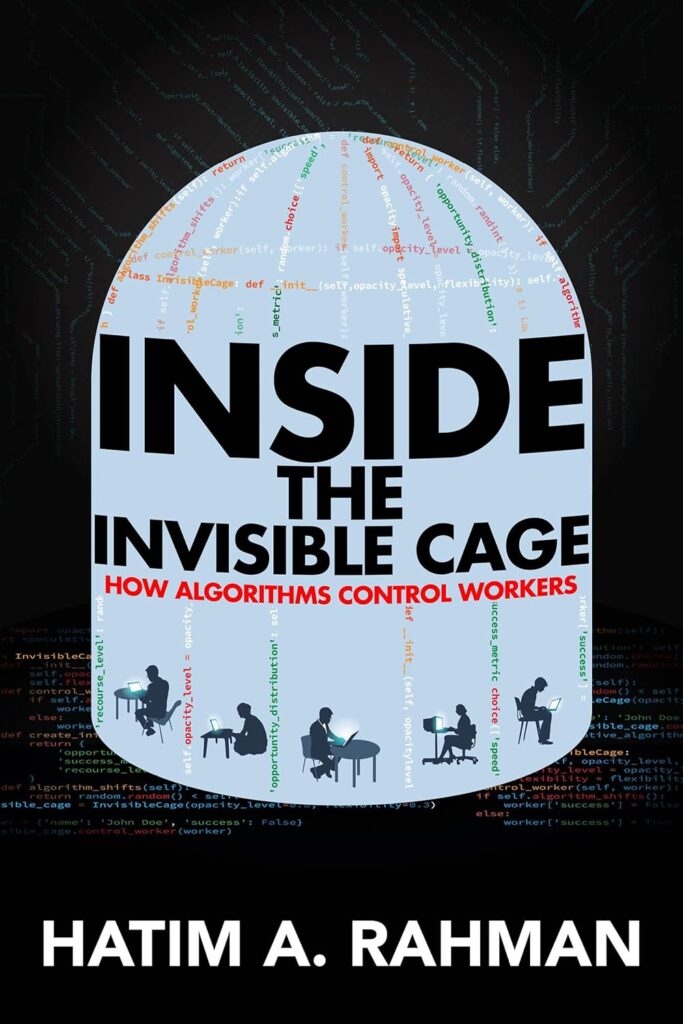
Author Meets Critics: Engaging Hatim Rahman’s Inside the Invisible Cage

, and
May 20, 2025

The following is a loosely edited transcript of the Author Meets Critics event devoted to Hatim Rahman’s Inside the Invisible Cage (University of California Press, 2024). The event was held on April 8, 2025 and sponsored by Work In Progress. The actual hour-long video will be posted soon.

Inside the Invisible Cage provides an in-depth account of “TalentFinder,” the pseudonymous platform that has become the dominant provider of on-line freelancer services in the world. The book stands as the most important analysis of the mechanisms that crowdworking platforms use to control the behavior of the highly skilled contractors and consultants they attract.

Continue Reading…
Research Findings

Networking or nepotism: How young people balance social capital and meritocratic logics in the job search

and
May 6, 2025

At this point it has become common knowledge: leveraging your social capital will help you on the job market. We hear it from scholars, who illustrate the benefits that job candidates get from referrals; from career counselors, who encourage us to reach out personal contacts at companies where we hope to work; and online, where we are relentlessly reminded to expand our professional networks to advance our careers. To get a job, it often seems, you have to know someone.

Yet leveraging connections during the job search is at odds with another widespread belief, that hiring should be meritocratic, based on candidates’ qualifications rather than their connections. This gives rise to a tension. On the one hand, we want to maximize our chances of getting the job by getting a foot in the door. On the other, we feel committed to the principle of meritocracy and concerned that using connections may shade into nepotism.

Continue Reading…